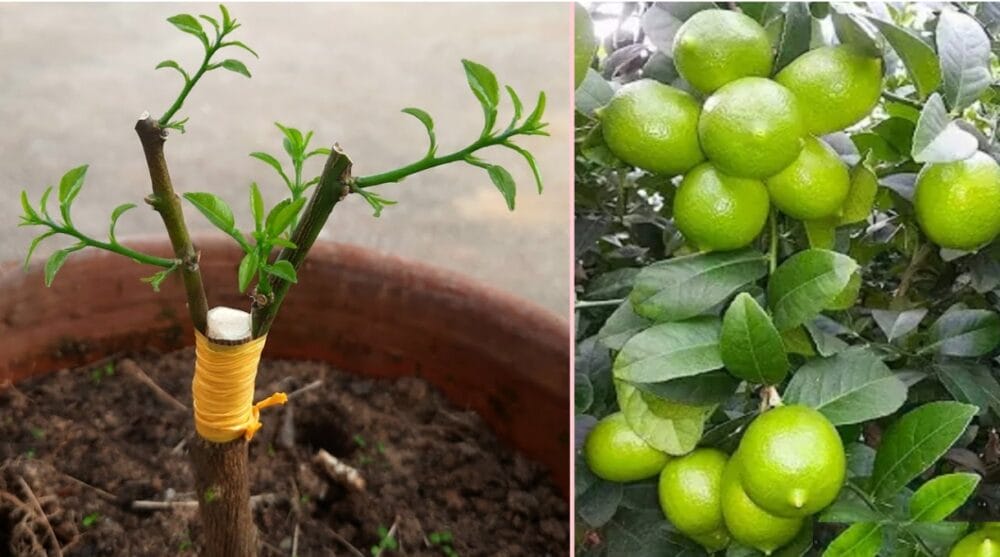
Lemon tree grafting is one of the simplest and most effective ways to grow healthy, fast-fruiting lemon plants. Instead of growing lemons from seeds—which can take many years and may not produce true-to-type fruits—grafting allows you to combine the strength of one plant with the fruit quality of another.
Even beginners can successfully graft a lemon tree with basic tools and a little patience.
In this guide, you’ll learn the easy way to do lemon tree grafting, the best time to graft, and simple after-care tips to ensure success.
Table of Contents
What Is Lemon Tree Grafting?
Grafting is a plant propagation technique where a scion (a healthy shoot from a fruit-producing lemon tree) is joined to a rootstock (a strong, disease-resistant lemon or citrus plant). Once they fuse together, the plant grows as a single tree.




The rootstock provides strength and resistance, while the scion determines fruit quality, size, and taste.
Benefits of Grafting Lemon Trees
Lemon tree grafting offers many advantages, especially for home gardeners:
- Faster fruit production (within 2–3 years)
- Better fruit quality and uniform size
- Improved disease and pest resistance
- Stronger root system
- Higher survival rate compared to seeds
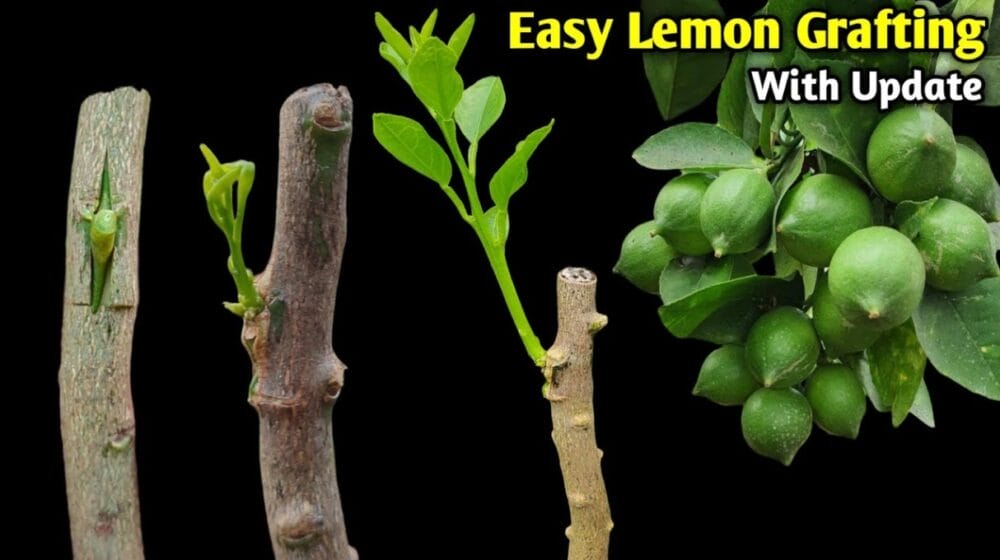
Because of these benefits, grafting is the preferred method for commercial and backyard lemon cultivation.
Also Read:How to Do Mango Tree Grafting: A Step-by-Step Guide for Healthy, High-Yield Trees
Best Time for Lemon Tree Grafting
The ideal time for grafting lemon trees is late winter to early spring or during the warm growing season when sap flow is active. In India and similar climates, February to April is considered best.
Avoid grafting during extreme heat, cold, or heavy rainfall, as these conditions reduce success rates.
Tools and Materials Needed
Before starting, gather the following:
- Sharp grafting knife or blade
- Healthy lemon rootstock (6–12 months old)
- Disease-free scion from a mature lemon tree
- Grafting tape or plastic wrap
- Pruning shears
- Clean cloth and rubbing alcohol (for sterilizing tools)
Always sterilize your tools to prevent infection.
Easy Method: Cleft Grafting for Lemon Trees
Cleft grafting is one of the easiest and most reliable methods for beginners.
Step 1: Prepare the Rootstock
Choose a healthy lemon rootstock about the thickness of a pencil. Cut it straight across at about 6–8 inches above ground level. Make a vertical split (about 1–1.5 inches deep) in the center of the cut stem.
Step 2: Prepare the Scion
Select a young, healthy scion with 2–3 buds. Trim it into a wedge shape at the bottom so it fits neatly into the split of the rootstock.
Step 3: Join the Scion and Rootstock
Insert the scion into the cleft, making sure the cambium layers (the green layer under the bark) of both parts touch. Proper alignment is crucial for successful grafting.
Step 4: Secure the Graft
Wrap the grafting area tightly with grafting tape or plastic wrap. This prevents moisture loss and keeps the scion stable.
Step 5: Seal and Protect
You may apply grafting wax or cover the area with a plastic bag to retain humidity. Keep the plant in partial shade.
After-Care Tips for Successful Grafting
Good after-care is essential for graft success:
- Water the plant lightly but regularly
- Keep it in a warm, shaded location
- Avoid direct sunlight for 2–3 weeks
- Remove any shoots growing below the graft union
- Check the graft after 15–20 days for new growth
Once the scion starts sprouting leaves, you’ll know the graft has taken successfully.
Also Read: Asparagus Cultivation: A Complete Guide for Successful Farming
Common Mistakes to Avoid
- Using unhealthy or diseased scion wood
- Poor cambium alignment
- Loose wrapping of the graft joint
- Overwatering after grafting
- Grafting during unfavorable weather
Avoiding these mistakes greatly improves your success rate.
Conclusion
Lemon tree grafting is an easy and rewarding technique that allows gardeners to grow high-quality lemon trees at home. With simple tools, the right timing, and proper care, even beginners can master this method. Cleft grafting, in particular, is a beginner-friendly approach that delivers excellent results.
If you want faster harvests and better lemons, grafting is definitely worth trying.
Frequently Asked Questions (FAQ)
Q1. Can I graft lemon trees at home?
Yes, lemon tree grafting can be easily done at home with basic tools and simple techniques like cleft grafting.
Q2. How long does a grafted lemon tree take to bear fruit?
A grafted lemon tree usually starts producing fruit within 2–3 years.
Q3. Which rootstock is best for lemon grafting?
Rough lemon, Rangpur lime, or any healthy citrus rootstock is ideal for lemon grafting.
Q4. How do I know if grafting is successful?
New leaf growth on the scion within 2–4 weeks indicates a successful graft.
Q5. Can I graft lemon trees in pots?
Yes, lemon trees can be grafted successfully in pots, provided proper care and drainage are maintained.
Q6. Is grafting better than growing lemon from seeds?
Yes, grafting is better because it ensures faster fruiting and true-to-type lemons.
Also Read: Amazing New Technique